






My Cart (0)
Table of Contents


Choosing the right filament is one of the most important steps in 3D printing. The material you use affects the strength, appearance, durability, print settings, and even the success rate of your final print.
Two popular materials often compared by makers are ABS and PETG. Both are strong thermoplastics used for functional 3D prints, but they are not the same. ABS is known for its toughness, heat resistance, and post-processing options, while PETG is valued for its easy printing, excellent layer adhesion, and good durability.
In this article, we will explain the main differences between ABS and PETG filament, their advantages, limitations, and which one you should choose for your next 3D printing project.
ABS filament
Definition and composition of ABS filament
ABS, short for Acrylonitrile Butadiene Styrene, is a strong petroleum-based thermoplastic widely used in manufacturing. You can find ABS in many everyday products such as automotive parts, electronic housings, toys, tools, and protective covers.
In 3D printing, ABS is popular because it creates tough and durable parts that can handle impact, wear, and higher temperatures better than many beginner-friendly materials.
However, ABS is not the easiest filament to print. It needs higher temperatures, good bed adhesion, and preferably an enclosed printer to prevent warping.
Properties and characteristics of ABS filament
ABS is a durable and impact-resistant material. It is more heat-resistant than PETG and can be post-processed in different ways, including sanding, drilling, painting, and acetone smoothing.
General characteristics
- Strong and impact-resistant
- Good heat resistance
- Suitable for functional parts
- Can be sanded and post-processed
- More difficult to print than PETG
- Prone to warping without proper settings
Advantages of ABS filament
ABS has several advantages that make it a great choice for functional and technical prints:
- ABS is strong and durable, making it suitable for mechanical parts.
- It has better heat resistance than PETG.
- It can be post-processed easily by sanding, painting, or acetone smoothing.
- It is a good option for parts that need to withstand impact.
- It is commonly used for automotive, industrial, and practical applications.
Common applications of ABS filament
ABS is often used when the printed part needs to be tough, practical, and resistant to higher temperatures.
Common ABS applications include:
- Automotive parts
- Tool holders
- Electronic housings
- Mechanical components
- Protective covers
- Functional prototypes
- Replacement parts
- Parts that require sanding or acetone smoothing
If your project needs strength, heat resistance, and post-processing possibilities, ABS can be a very good choice.
Limitations and drawbacks of ABS filament
To properly understand ABS vs PETG, it is also important to know the disadvantages of ABS.
ABS can be challenging, especially for beginners. It shrinks as it cools, which can cause warping, lifting corners, or cracks between layers. For best results, ABS should be printed in an enclosed printer with stable temperature conditions.
Some common drawbacks of ABS include:
- Higher risk of warping
- Requires a heated bed
- Works best with an enclosure
- Produces noticeable smell while printing
- Needs good ventilation
- Not as beginner-friendly as PETG
PETG filament
Definition and composition of PETG filament
PETG, short for Polyethylene Terephthalate Glycol, is a modified version of PET plastic. The added glycol makes the material easier to print, less brittle, and more suitable for 3D printing.
PETG is often described as a material that combines some of the best properties of PLA and ABS. It is easier to print than ABS, but stronger and more durable than PLA.
This makes PETG a very popular choice for makers who want strong, functional prints without the printing difficulties of ABS.
Properties and characteristics of PETG filament
PETG is known for its excellent layer adhesion, good impact resistance, low shrinkage, and chemical resistance. It is also less prone to warping than ABS, which makes it easier to print on open-frame 3D printers.
General characteristics
- Strong and durable
- Easier to print than ABS
- Low shrinkage
- Good chemical resistance
- Excellent layer adhesion
- More flexible than ABS
- Can be prone to stringing
Advantages of PETG filament
PETG offers many advantages for both beginners and experienced users:
- PETG is easier to print than ABS.
- It has very good layer adhesion.
- It is less likely to warp.
- It is strong, durable, and slightly flexible.
- It has good resistance to moisture and chemicals.
- It produces little to no unpleasant smell during printing.
- It is suitable for functional parts and everyday-use objects.
Common applications of PETG filament
PETG is a versatile material that works well for strong, practical, and durable prints.
Common PETG applications include:
- Functional prototypes
- Mechanical parts
- Storage boxes
- Brackets and mounts
- Planters
- Protective covers
- Display parts
- Outdoor objects
- Containers
- Workshop accessories
PETG is a great option when you need a reliable material that is strong but still easy enough to print.
Limitations and drawbacks of PETG filament
Although PETG is easier to print than ABS, it is not perfect. PETG can be stringy if the settings are not properly adjusted. It also has a softer surface, which means it can scratch more easily than ABS.
Some common drawbacks of PETG include:
- Can cause stringing and oozing
- Surface can be softer and more prone to scratches
- Not as heat resistant as ABS
- Post-processing is more difficult
- Requires good cooling and correct retraction settings
Key differences between ABS and PETG filaments
When comparing ABS vs PETG, the best choice depends on your printer, your experience level, and the purpose of your 3D printed part.
Material strength and durability
Both ABS and PETG are strong materials, but they behave differently.
ABS is tougher and better for parts that need to resist impact, friction, or higher temperatures. PETG is also strong, but it is slightly more flexible, which helps prevent cracking under stress.
If you need a rigid and tough technical part, ABS is often the better choice. If you need a strong part that is easier to print and less brittle, PETG is a safer option.
Printing difficulty
PETG is much easier to print than ABS.
ABS needs a stable printing environment, high bed temperature, and preferably an enclosure. Without these, the print can warp or crack.
PETG has lower shrinkage and better bed adhesion, which makes it more beginner-friendly. It can usually be printed successfully on many standard 3D printers.
For beginners, PETG is usually the better choice.
Heat resistance
ABS has better heat resistance than PETG. This makes ABS suitable for parts that may be exposed to warmer environments, such as car interiors, electronic housings, or mechanical parts near heat sources.
PETG can still handle moderate temperatures, but it may soften sooner than ABS.
If heat resistance is important, ABS is the better option.
Warping and shrinkage
One of the biggest differences between ABS and PETG is warping.
ABS shrinks more as it cools, which can cause lifting corners, cracks, or failed prints. PETG has much lower shrinkage, so it is more dimensionally stable and easier to print.
If you want fewer failed prints, PETG is the safer choice.
Surface finish and post-processing
ABS usually has a matte finish and is easier to sand, paint, and smooth. One of its biggest advantages is acetone smoothing, which can create a smooth and glossy surface.
PETG often has a glossier finish naturally, but it can be more difficult to sand cleanly. It may also show stringing if print settings are not optimized.
Choose ABS if you want more post-processing options. Choose PETG if you want a naturally glossy and clean-looking print with less effort.
Odor and printing environment
ABS produces a noticeable smell while printing and should be used in a well-ventilated area. An enclosure is also recommended to improve print quality and reduce warping.
PETG has much less odor and is generally more comfortable to print indoors.
For home users and beginners, PETG is usually more convenient.
Choosing between ABS and PETG
If you are deciding between ABS vs PETG, think about what your printed part needs to do.
Choose ABS if you need:
- Better heat resistance
- Strong and impact-resistant parts
- Parts for mechanical or industrial use
- A material that can be sanded, painted, or acetone smoothed
- A more rigid and tough final print
- A filament for enclosed 3D printers
Choose PETG if you need:
- Easier printing
- Less warping
- Strong and durable everyday parts
- Good layer adhesion
- A slightly flexible material
- Less smell during printing
- A beginner-friendly alternative to ABS
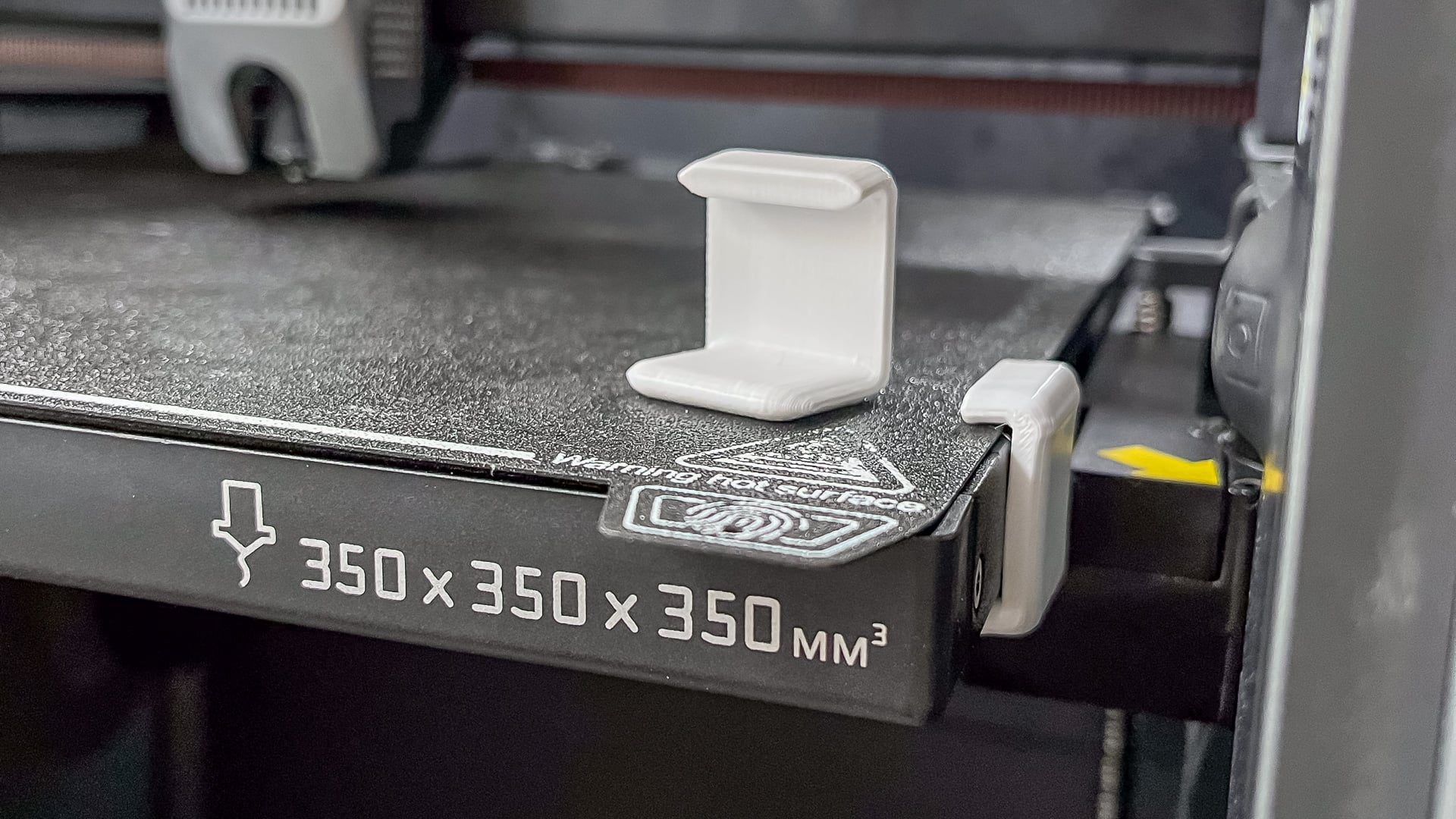
ABS vs PETG: Which one is better?
There is no single winner because ABS and PETG are made for different needs.
If you are a beginner or you want a strong filament that is easy to print, PETG is usually the better choice. It is reliable, durable, and much less demanding than ABS.
If you already have more 3D printing experience, an enclosed printer, and need parts with higher heat resistance or better post-processing options, ABS is a better material.
For most everyday functional prints, PETG is the easier and more practical option. For demanding technical parts, ABS still has an important place.
Frequently asked questions
Is ABS stronger than PETG?
ABS is generally tougher and more impact-resistant, especially for technical and mechanical parts. PETG is also strong, but it is slightly more flexible and has excellent layer adhesion.
Is PETG easier to print than ABS?
Yes. PETG is much easier to print because it has lower shrinkage and is less prone to warping. ABS usually requires an enclosure and stable printing temperatures.
Which filament is better for beginners, ABS or PETG?
PETG is better for beginners. It offers good strength and durability without the common printing problems of ABS, such as warping and cracking.
Is ABS more heat-resistant than PETG?
Yes. ABS has better heat resistance, making it more suitable for parts exposed to higher temperatures.
Does ABS smell while printing?
Yes. ABS can produce a strong smell while printing, so good ventilation is recommended. PETG has much less odor and is more comfortable for indoor printing.
Can PETG replace ABS?
In many cases, yes. PETG can replace ABS for everyday functional parts, brackets, holders, containers, and prototypes. However, ABS is still better when you need higher heat resistance, easier sanding, or acetone smoothing.
Conclusion
ABS and PETG are both excellent 3D printing materials, but they are suitable for different users and applications.
ABS is strong, tough, heat-resistant, and ideal for technical parts, but it requires more experience and better printing conditions. PETG is easier to print, durable, less prone to warping, and a great choice for beginners or anyone who wants reliable functional prints.
If you are new to 3D printing, start with PETG. If your project needs higher heat resistance and you have the right printer setup, ABS is a powerful material worth using.
Share


 Previous post

