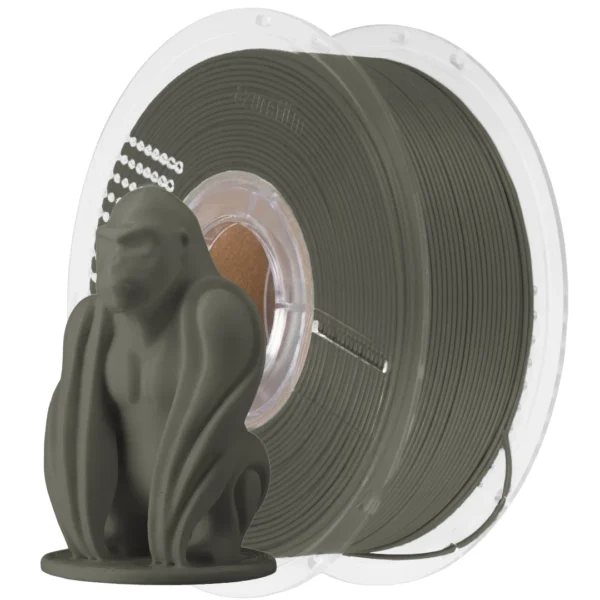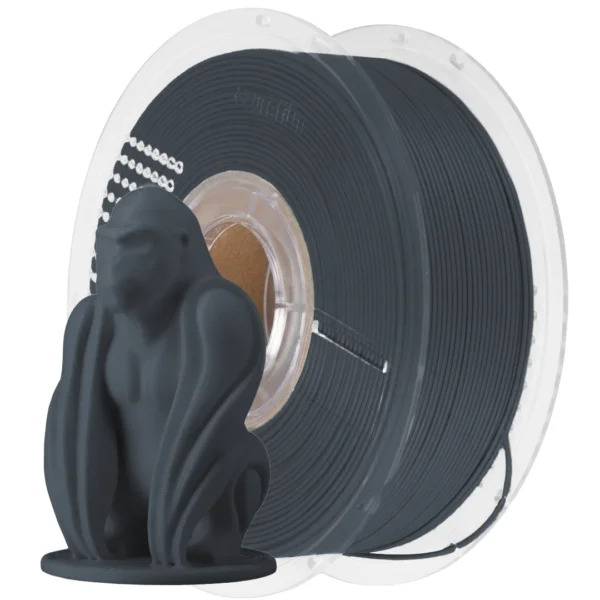
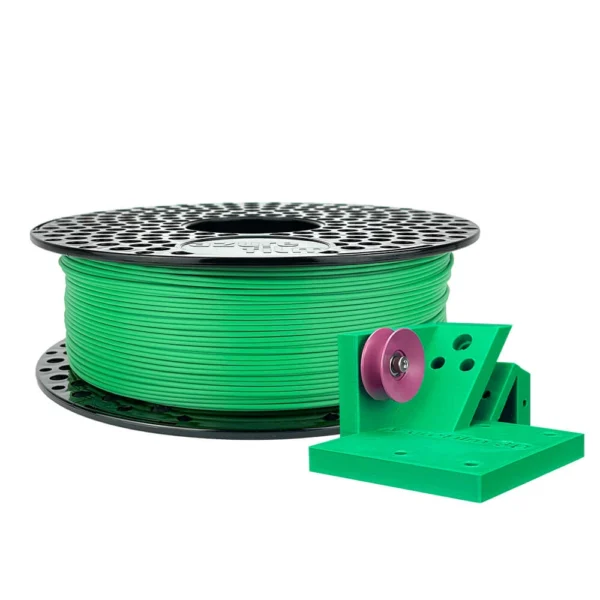
Discover AzureFilm ABS filament for strong, rigid and impact-resistant 3D printed parts. ABS is a proven technical material for tools, housings, automotive components and demanding functional projects.
Effect
Level
Materials
Type
Color
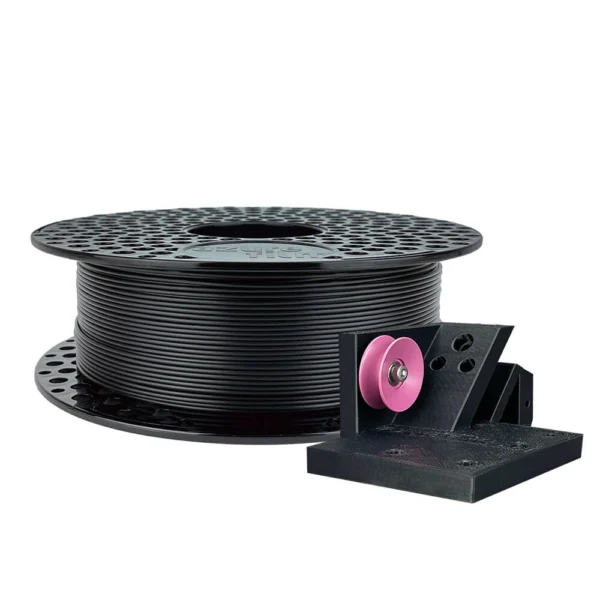
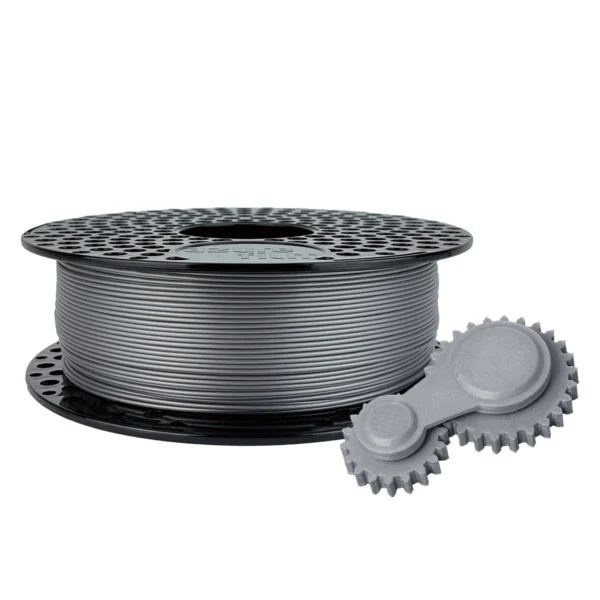



ABS filament, short for acrylonitrile butadiene styrene, is a classic engineering thermoplastic used for strong and functional FDM 3D prints. It combines rigidity with impact resistance and offers better heat performance than standard PLA, making it suitable for prototypes, tools, housings and mechanical components. ABS has been used for decades in manufactured products, so it is a familiar material for users who want 3D printed parts with engineering-oriented properties.
Compared with PLA or PETG, ABS requires more control of the printing environment. Its higher shrinkage during cooling can cause warping or layer separation, especially on large models. With a heated bed, stable chamber temperature and correctly tuned settings, however, ABS can produce durable parts with good dimensional accuracy and a smooth finish.
ABS 3D printer filament is valued for its toughness, impact resistance, moderate flexibility and heat resistance. It is well suited to parts that must tolerate repeated handling or mechanical load. ABS can also be drilled, sanded, machined, glued and painted, which makes it useful for prototypes and assemblies that require post-processing.
Unlike ASA, standard ABS is not the first choice for long-term outdoor exposure because UV radiation can gradually affect colour and material performance. For exterior parts exposed continuously to sunlight and weather, ASA is generally a better option. ABS remains highly useful for indoor technical parts, enclosures, fixtures and components where UV resistance is not the primary requirement.
Common ABS applications include functional prototypes, brackets, housings, gears, fixtures, workshop tools, protective components, electronics enclosures, automotive prototypes and durable household parts. Its combination of strength and post-processability makes it particularly useful when a model needs to be fitted, drilled, sanded or assembled after printing.
ABS-based materials can also be formulated to improve specific properties such as printability, impact behaviour, dimensional stability or heat resistance. Because the performance of these formulations can differ significantly, choose the exact ABS material according to the requirements of the final part rather than relying on the polymer name alone.
ABS typically requires a heated build plate and performs best in an enclosed 3D printer. The enclosure helps prevent rapid cooling and drafts, which reduces internal stress, warping and layer cracking. Large parts benefit most from a stable chamber temperature, while small components may be more forgiving.
Part cooling is usually kept lower than with PLA because excessive cooling can weaken interlayer bonding and increase warping. The exact nozzle temperature, bed temperature, fan level and print speed depend on the specific ABS formulation, geometry and printer. A clean build surface and correctly calibrated first layer remain essential for reliable adhesion.
ABS can release fumes and volatile organic compounds during printing. Use it in a well-ventilated space and, where possible, in an enclosed printer with suitable filtration or extraction. Avoid placing the printer in occupied living areas without adequate ventilation.
ABS can also absorb moisture during storage. Wet filament may cause bubbles, inconsistent extrusion and poor surface quality, so it should be stored sealed with desiccant and dried according to the product instructions when necessary. For finishing, ABS parts can be sanded, painted and mechanically processed. Some solvent-based smoothing methods are possible, but they require strict attention to chemical safety and ventilation.
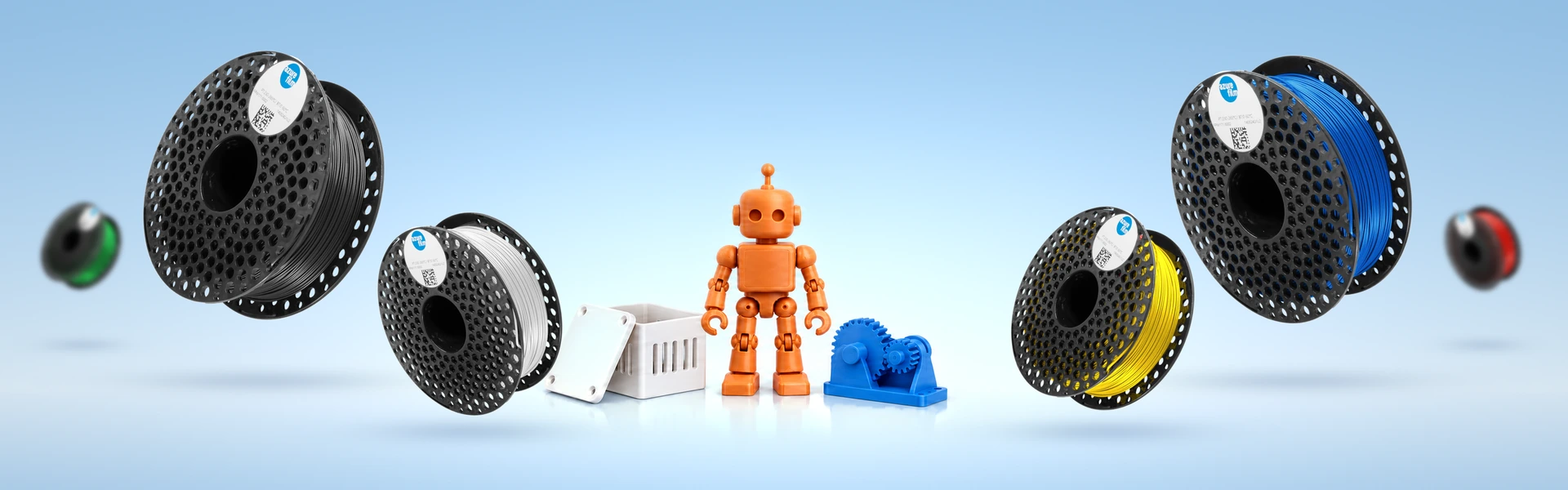
AzureFilm ABS filaments are designed for users who need durable engineering 3D printer filament for functional parts and prototypes. The range can include different ABS-based formulations so users can choose the balance of printability, strength and technical performance that best matches the application.
Choose ABS for robust indoor parts that benefit from impact resistance, heat performance and post-processing. For outdoor UV exposure, consider ASA; for easier everyday printing, PETG may be more convenient. The correct material is always the one that best matches the operating conditions of the finished part.
No products in the cart.