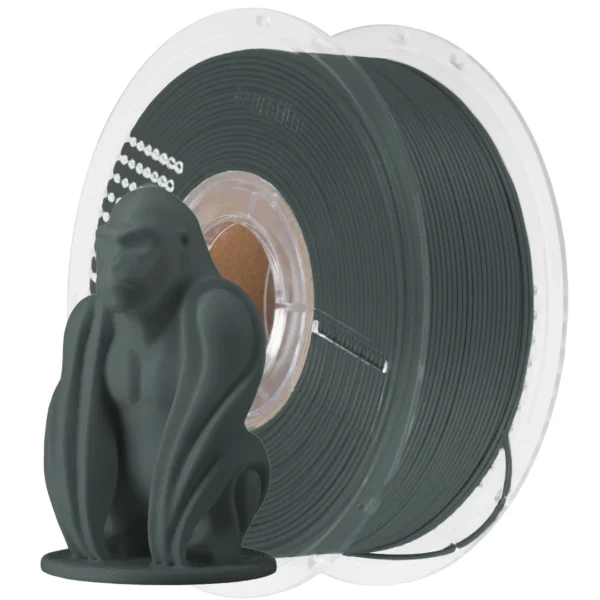
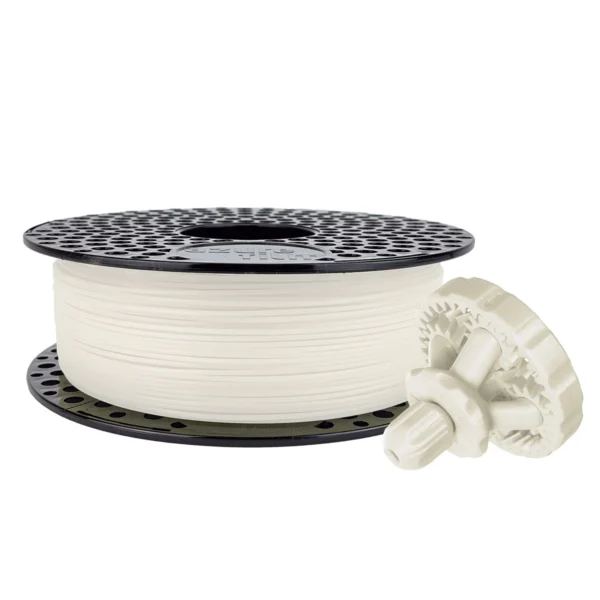
Shop AzureFilm ASA filament for durable outdoor and technical 3D prints. ASA offers strong UV, water and chemical resistance, making it a smart choice for parts exposed to weather and demanding environments.

Effect
Level
Materials
Type
Color

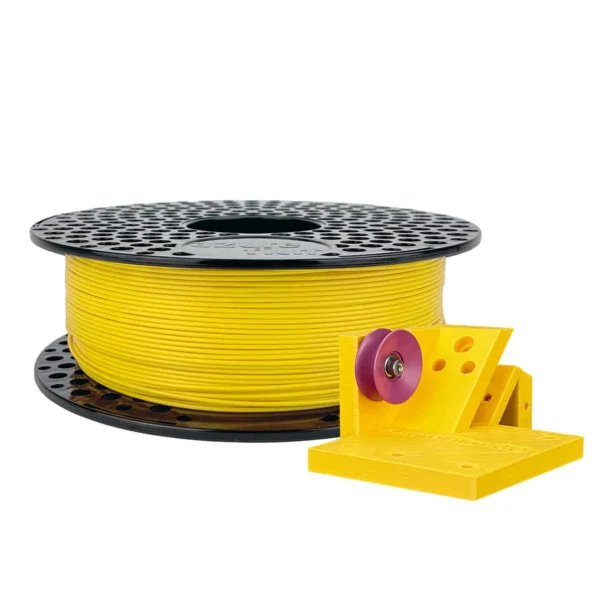

ASA filament, or acrylonitrile styrene acrylate, is an engineering thermoplastic designed for durable 3D printed parts that must perform in demanding environments. It is often compared with ABS because the two materials share similar strength, rigidity and processing behaviour, but ASA offers a major advantage for outdoor applications: significantly better resistance to UV radiation and weathering.
For FDM and FFF 3D printing, ASA is a strong choice when a part needs to retain its appearance and mechanical properties during exposure to sunlight, changing temperatures and outdoor conditions. It is therefore widely used for functional prototypes and end-use parts where standard PLA or PETG may not provide enough long-term environmental resistance.
ASA 3D printer filament combines good mechanical strength, impact resistance, heat resistance and dimensional stability with strong weather resistance. It is less likely than ABS to fade, yellow or degrade during long-term UV exposure, which makes it particularly suitable for exterior parts. ASA also offers good resistance to water and many chemicals, although exact compatibility depends on the chemical, concentration, temperature and filament formulation.
The surface of ASA parts can be smooth and professional, making the material suitable for visible functional components as well as technical prototypes. Like ABS, some ASA formulations can also be post-processed using compatible mechanical or solvent-based techniques, but any chemical treatment should be carried out with appropriate safety precautions.
ASA filament is commonly used for outdoor housings, brackets, garden components, automotive accessories, fixtures, protective covers, equipment parts, signage, marine-related components and prototypes that need better UV and weather resistance. It is also suitable for indoor technical parts when higher heat resistance and toughness are required.
For demanding end-use applications, part design and print orientation are as important as the material itself. Layer direction, wall thickness, infill and thermal history can significantly affect mechanical performance, so critical parts should be tested under the same loads and environmental conditions they will experience in service.
ASA and ABS are both engineering filaments, but their strongest use cases differ. ABS remains a cost-effective material for robust indoor parts, prototypes and components that benefit from impact resistance and post-processing. ASA is generally the better choice for outdoor 3D printing because of its superior UV and weather resistance.
Both materials require more temperature control than PLA or PETG. If outdoor stability is a key requirement, ASA should usually be considered before ABS. If UV exposure is limited and the focus is on functional indoor parts, an ABS-based material may be sufficient.
ASA prints at relatively high nozzle and bed temperatures and benefits strongly from an enclosed print environment. Controlling drafts and maintaining a stable temperature around the model reduces warping, corner lifting and layer separation, especially on large parts. A clean build surface, correct first-layer calibration and suitable adhesion strategy are important for reliable results.
Ventilation is also important. ASA can release fumes and volatile compounds during printing, so it should be used in a well-ventilated area and preferably in an enclosed printer with appropriate filtration or extraction. Exact print temperatures, cooling and chamber requirements depend on the formulation and printer.
AzureFilm ASA filaments are intended for functional 3D printing where outdoor durability, heat resistance and mechanical performance matter. Different ASA formulations can prioritise easier printing, dimensional stability or higher technical performance while retaining the core benefits of the ASA material family.
Choose ASA when the final part must withstand sunlight and weather better than standard indoor-oriented filaments. Follow the recommendations for the specific ASA formulation and use an enclosed, well-controlled printing environment for the most consistent results.
No products in the cart.