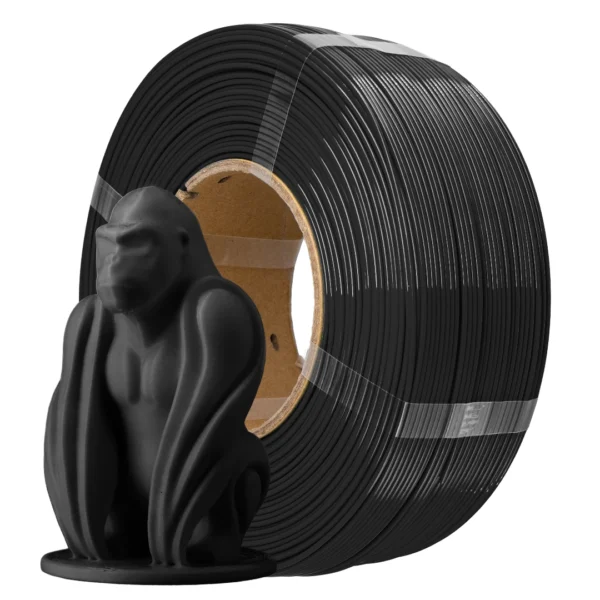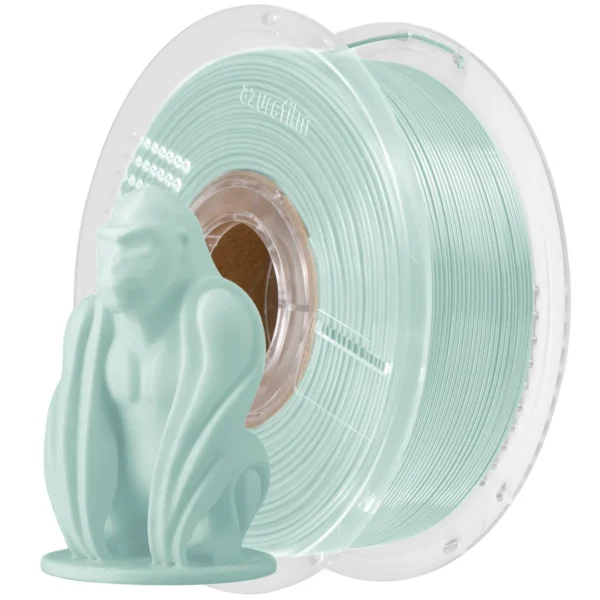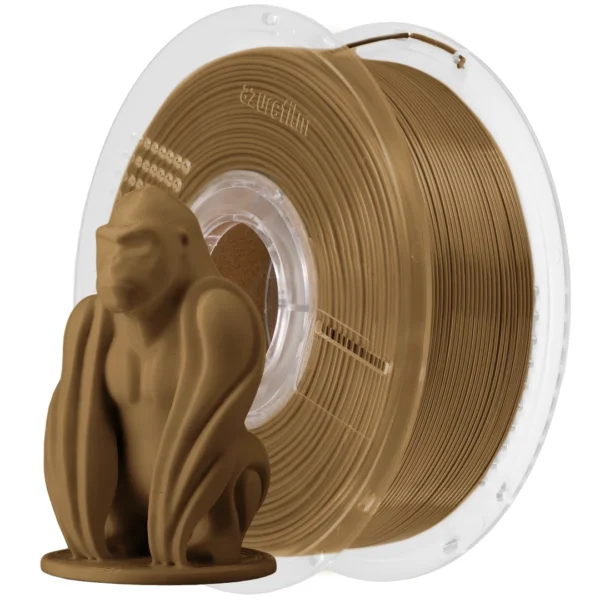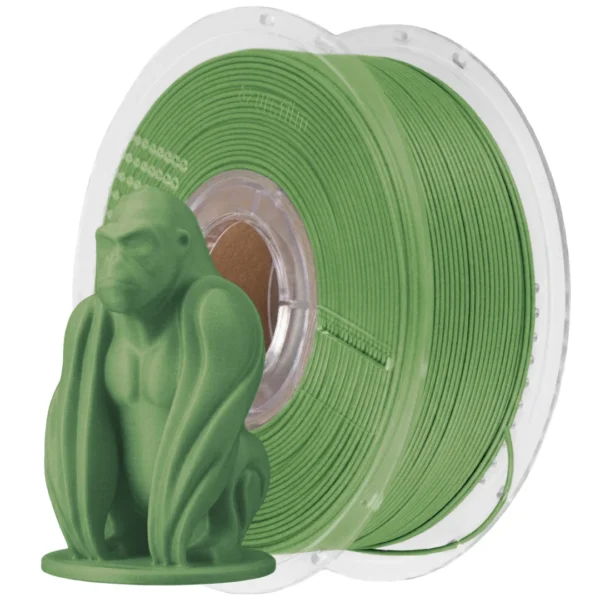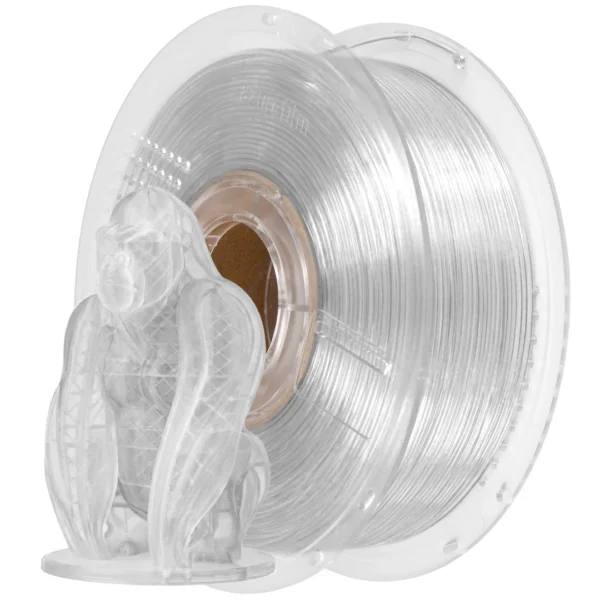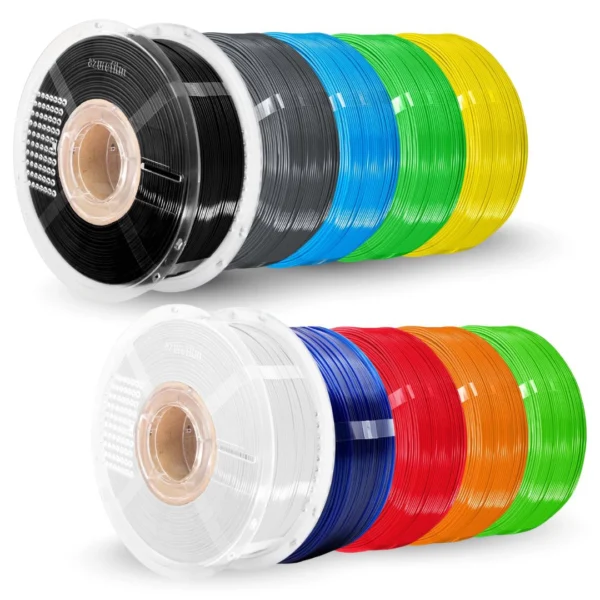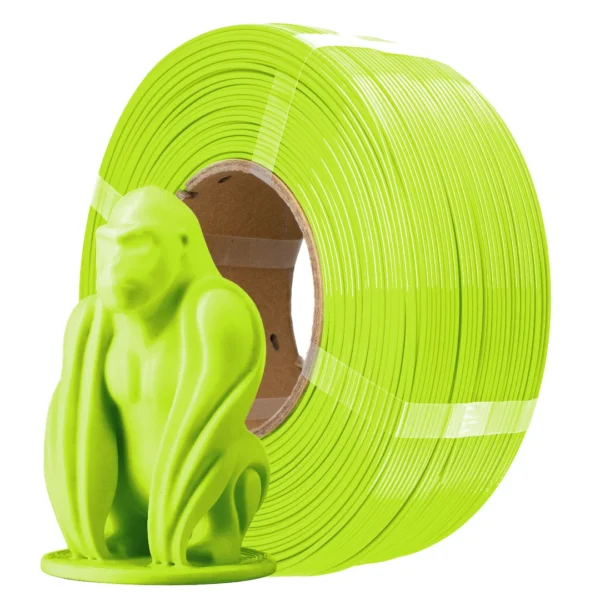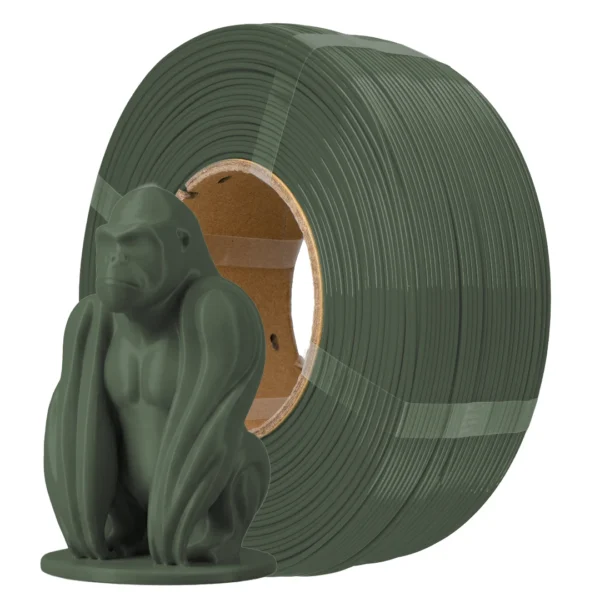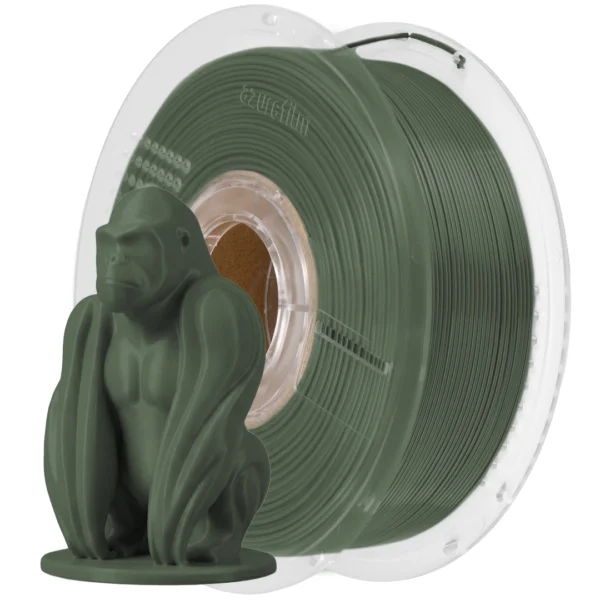
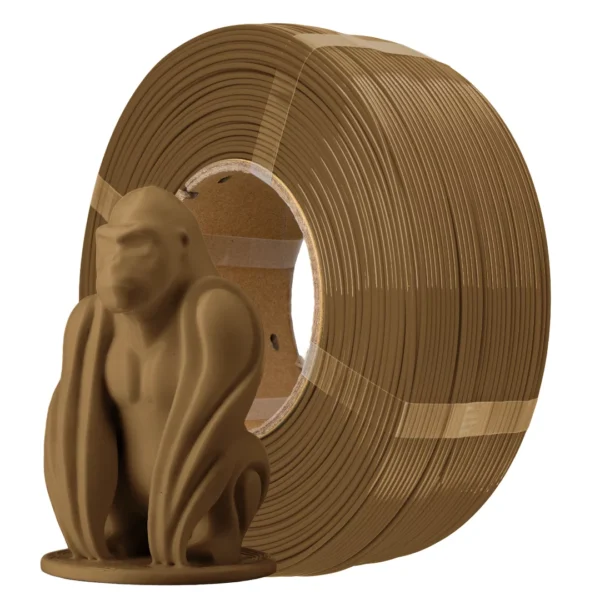
Choose AzureFilm PETG filament for durable, reliable and high-speed 3D printing. PETG combines easy printability with good strength, layer adhesion and resistance for functional parts and everyday applications.

Effect
Level
Materials
Type
Color

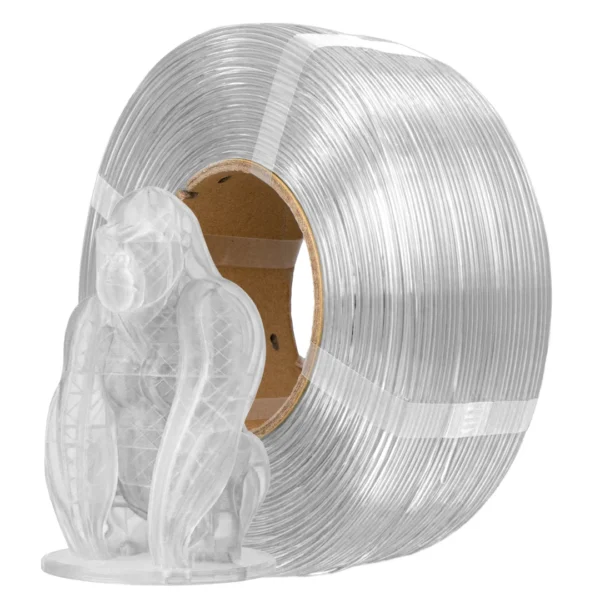







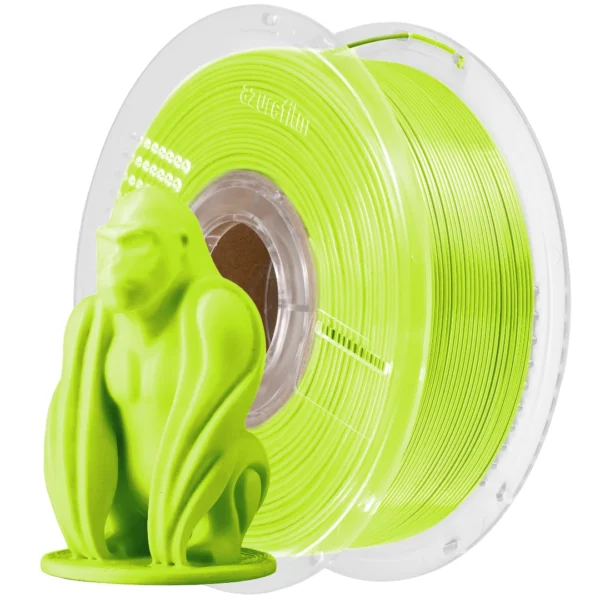


PETG filament is a widely used 3D printing material that combines good mechanical performance with relatively easy printability. PETG stands for polyethylene terephthalate glycol-modified, a copolyester formulated to reduce crystallisation and improve processing. In FDM and FFF 3D printing, PETG is often chosen when a part needs more toughness, impact resistance and temperature resistance than standard PLA while remaining easier to print than many engineering thermoplastics.
A well-tuned PETG filament can produce strong layers, durable parts and a smooth surface with minimal warping. It is suitable for both hobby and functional 3D printing, making it one of the most useful all-round materials for users who want a step beyond PLA without moving directly to more demanding filaments.
PETG is known for a useful combination of strength, ductility and layer adhesion. Compared with standard PLA, it is generally less brittle and better suited to parts that may experience impact, flexing or repeated handling. It also offers good resistance to water and many common chemicals, although the exact chemical resistance depends on the formulation and the substance involved.
Another advantage of PETG 3D printer filament is its low tendency to warp compared with materials such as ABS. Most PETG can be printed without a heated chamber, while a heated build plate is commonly used to improve first-layer adhesion and dimensional stability. PETG can also be produced in formulations optimised for faster printing, allowing modern high-flow 3D printers to take advantage of higher print speeds while maintaining reliable extrusion.
PETG is a strong choice for functional prototypes, brackets, holders, enclosures, containers, workshop parts, robotics components, protective covers, household items and general-purpose mechanical prints. Its balance of durability and printability also makes it useful for larger parts where low warping is important.
For outdoor use, PETG can be more suitable than PLA, but long-term UV, heat and weather resistance still depend on the specific formulation, colour and environment. For parts exposed continuously to sunlight, elevated temperature or demanding outdoor conditions, ASA or another dedicated engineering material may be a better choice.
PETG usually requires a higher nozzle temperature than PLA and benefits from a heated bed. Exact settings vary between standard, high-speed and specialised PETG formulations, so product-specific recommendations should always be used. A clean build surface and correct first-layer height are important because PETG can adhere very strongly to some surfaces. On certain build plates, a suitable release layer or adhesive can help protect the surface and simplify part removal.
Stringing is one of the most common PETG printing issues. It can be reduced by balancing nozzle temperature, travel speed, retraction and filament dryness. Excessive cooling can weaken layer bonding, while insufficient cooling can reduce detail on bridges and overhangs. The best cooling level therefore depends on geometry, print speed and the specific PETG filament.
PETG is hygroscopic and gradually absorbs moisture from the surrounding air. Moist PETG can produce bubbles, stringing, rough surfaces and inconsistent extrusion. Keep the filament sealed with desiccant when it is not being printed. If a spool has been exposed to humid air for an extended period, dry it according to the manufacturer's recommendations before critical or high-speed prints.
AzureFilm PETG filaments are developed for users who need dependable 3D printer filament for durable everyday and functional parts. The range can include different colours, finishes, refill formats and performance-focused formulations, while the core PETG benefits remain the same: strong layer bonding, good durability and accessible printing behaviour.
Choose PETG when you need a material that sits between easy-printing PLA and more demanding engineering filaments. For best results, match the specific PETG formulation to the part's mechanical, environmental and visual requirements and use the recommended profile for your printer.
No products in the cart.